Clickable chart
Whitehaven Beach photos: where to stand, when to shoot
Light through the year
Twelve months of sun and shade
Choose a month to compare sunset, day length and the usual warmth around Hill Inlet.
Sunset
Jun
Mid-June has 10.9 hrs of sun above the horizon, so the light is low and soft for longer.16
Jul
The average daily high in July is 22.1 °C.16
Dec
Mid-December has 13.3 hrs of sun above the horizon, so the day for photographs is long.16
Sunset is worked out for the 15th of each month on Queensland time. Day length is for Hill Inlet; temperatures come from the NOAA station at Hamilton Island Airport, 15.9 km away, 1991 to 2020.
Whitehaven Beach photos fall into two kinds: the famous swirl is a lookout picture and the white sand is a beach picture. This page sorts the two, with tide, light and drone rules.
Editorial team, hillinletlookout.com · Updated November 7, 2026 · Quick read: 7 min
Main facts
- Lookout shotHill Inlet Lookout has three platforms with views over turquoise water and white silica sand.1
- TideAt mid to low tide, more of the pale silica sand shows through the shallows.2
- LightEarly morning can offer softer light and cooler walking conditions.3
- DronesCASA rules apply, and the park prohibits drones in protected-area camping areas.4
- PhoneA waterproof bag for your phone or camera is also worth having.5
The two pictures everyone comes for
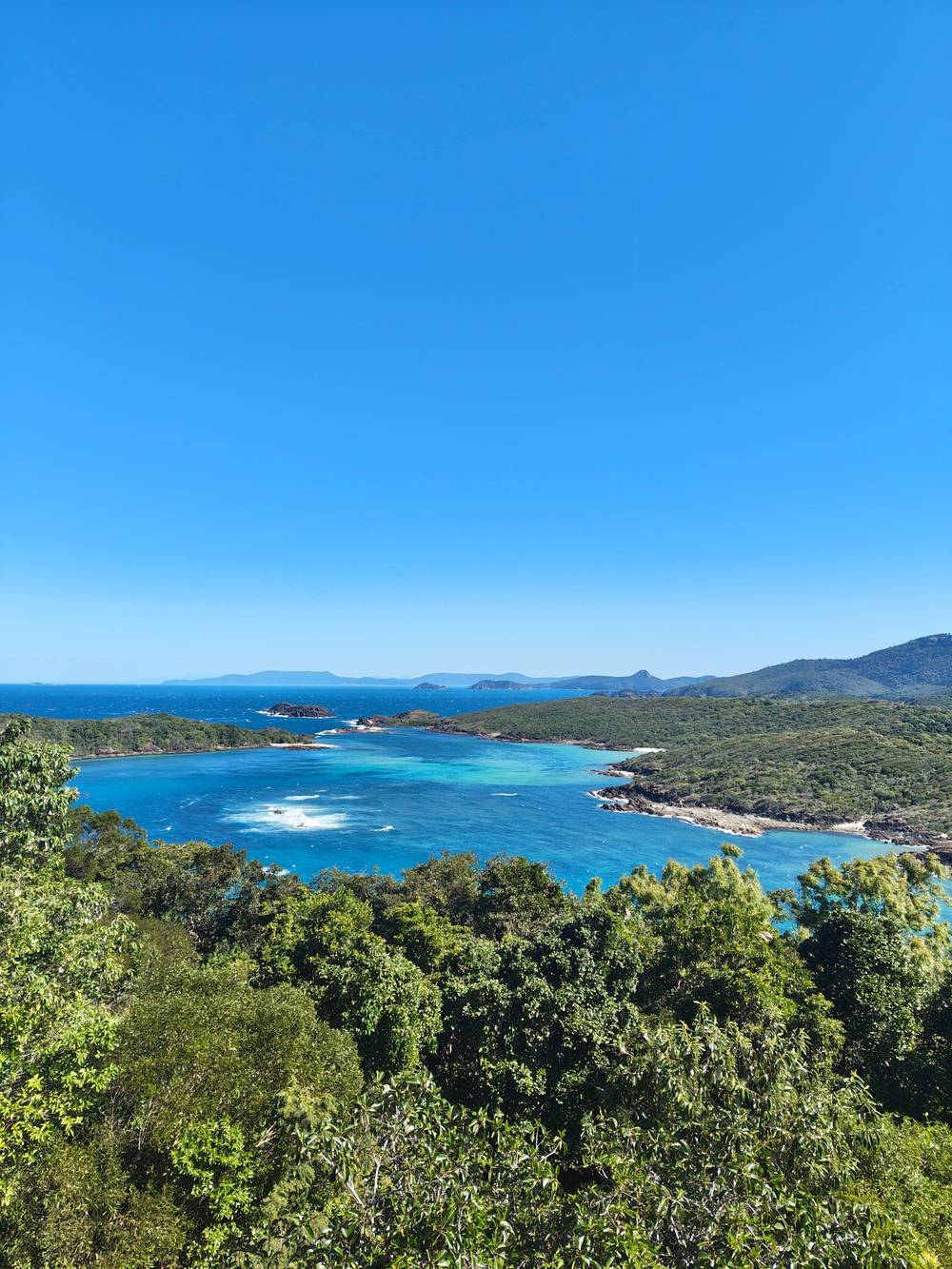
Hill Inlet is described by Tourism Whitsundays as one of the most photographed spots in The Whitsundays.6 The colours range from white sand ribbons through turquoise shallows to deeper blue channels, and the pattern is best viewed from the lookout above the inlet.7,8 That makes the first of the two pictures a high one: a view down onto water and sand from a platform on the hill, where the swirls read as a drawing.
The second picture is made on the sand itself. Whitehaven Beach is renowned for pure silica sand that stays cool underfoot and clear, shallow water, and the sand is 98% pure silica.9,10 Frames taken at beach level are about that brightness, the pale line of sand against the colour of the shallows, and not about pattern. Trying to make one frame do both jobs rarely works, so think of them as separate pictures.
Plan for both. The rafting day booked through this site builds a guided walk to the Hill Inlet lookout into the day, and the listing says the stop is meant for photographs of the well-known view, with time on the beach as well. Pictures of Whitehaven Beach from the lookout and from the water belong to the same day, so keep your phone charged and your lens clean for both.
Shot by shot
Which picture needs what
| Picture | Best spot | What helps | What to know |
|---|---|---|---|
| The swirl | Hill Inlet Lookout | Mid to low tide2 | Three platforms1 |
| Wide inlet view | The platform edge | A phone is enough | Colours vary with weather17 |
| Close ribbon | The same lookout | A zoom lens | Early light is softer3 |
| Beach line | The 7 km sand14 | Low angle, level horizon | No shops on site18 |
| Sand and shallows | The water's edge | Reef-safe sun gear19 | The sand is 98% silica10 |
| From above | A scenic flight | Window seat | Flights from $249 |
Flight prices are from prices, not exact quotes, and the tide, weather and light you meet on the day decide how a picture looks.
The lookout shot, platform by platform
The lookout is reached from Tongue Bay by a short rainforest climb with stone steps that lead to three platforms.1 According to Tourism Whitsundays' beach page, the walk climbs Tongue Point on a 1.4 km return track, which takes around 40 minutes on established walking tracks.12,13 Three platforms means three slightly different frames, so a photographer who walks all of them comes back with options instead of one angle repeated.
Start wide. The swirl is a large pattern, and a wide frame keeps the shape of the inlet, the white ribbons and the open bay together. Then go in tighter on a single ribbon where the sand meets the deeper blue channel. A phone does the wide frame well, and a longer lens or the zoom on a camera does the tight one. Stay on the platform and keep your bag out of the way of the next person, because the viewing spots are small.
The walk includes a short uphill climb on a formed track, so carry only what you need.15 A camera strap that holds the body close and a phone that is already unlocked will save more time than any extra lens. A tripod is better left on the boat, since the platforms are small and a quick, steady hand is all the frame needs.
How tide and light change the picture
The pattern shifts with the tide and the weather, so each visit brings its own formations and colours.17 At mid to low tide, more of the pale silica sand shows through the shallows, and most operators plan their visit around the tide.2,22 For pictures this is the biggest variable: at a higher tide the sand is under deeper water and the pattern is softer, while at a lower tide the white ribbons are sharper against the blue.
Light matters next. Early morning can offer softer light and cooler walking conditions, and it also brings fewer people to the lookout.3,2 Day length changes through the year at the nearest weather station, Hamilton Island Airport, which is not Whitehaven itself: mid-December has 13.3 hrs of sun above the horizon and mid-June has 10.9 hrs.16,16 Shorter winter days give a lower sun and a longer stretch of softer light, which suits the sand.
Weather changes the colour as well as the tide does. Summer is hotter, wetter and more humid, while winter is generally mild and drier, and November to March is warmer and wetter with tropical showers.23,24 A cloudy day takes the sparkle out of the shallows but keeps the pattern, and a clear day brightens the water to the shades people expect. Neither is a bad result, and a rain shower passing over the inlet can give a dramatic frame.
Match the picture
Which picture do you want most?
Choose the line that sounds like you and the answer sits beside it.
If I want the famous swirl picture
Go to the lookout
The lookout is where the tides make swirls of sand and sea.20
If I want soft light and fewer people
Go early
Early morning brings softer light, cooler walking conditions and fewer people at the lookout.2
If I only have a phone
Shoot wide, then tight
A phone handles the wide frame well; a waterproof bag protects it.5
If I want the whole swirl from above
Book a flight
Scenic flights show Whitehaven Beach and Hill Inlet from above.21
If I want to fly my own drone
Check the rules first
CASA rules apply, and the park prohibits drones in protected-area camping areas.4
Beach-level pictures and what to avoid
On the sand, images of Whitehaven Beach that work use the shape of the beach itself. The beach stretches 7 km along the eastern side of Whitsunday Island, which gives a long, uncluttered line to shoot along.14 Crouch low and place the sand line on the lower third of the frame. Keep the horizon level, since a tilted line is easy to avoid and hard to fix later.
Faces and footprints are the two things that spoil a clean beach picture. Walk to the water's edge and shoot back along the wet sand, where waves have already smoothed the surface. For a people-free frame, wait for a gap between groups. A day with time on the sand helps: the Southern Lights option lists approximately two hours at South Whitehaven, and the Northern Exposure option an hour on the beach at North Whitehaven.
There are no shops or cafes on the beach, and the beach remains undeveloped within the national park, so what you carry is what you have.18,26 Bring reef-safe sun protection, drinking water and a hat.19 Sand and salt spray are hard on lenses, so keep a cloth in a dry pocket and change lenses only in the boat or away from the surf.
A photo morning
A day of pictures, in the order they come
Early
Softer light on the way
Early morning can offer softer light and cooler walking conditions.3
At the landing
Land at Tongue Bay
Tours for the lookout land at Tongue Bay on the northern end of Whitsunday Island.11
On the track
Climb Tongue Point
Tourism Whitsundays' beach page gives a 1.4 km return, around 40 minutes, on established walking tracks.12,13
At the platforms
Try each viewing spot
The lookout has stone steps leading to three platforms over turquoise water and white silica sand.1
Mid to low tide
Catch the ribbons
At mid to low tide, more of the pale silica sand shows through the shallows.2
On the sand
Beach-level frames
Whitehaven Beach stretches 7 km and its sand is 98% pure silica.14,10
Phone, camera and drone rules
A phone is enough for the lookout and the beach, provided it is dry and has storage. A waterproof bag for your phone or camera is worth having, because boat spray and wet hands reach everything on a day like this.5 Clean the lens before each frame; it is the cheapest upgrade available and it matters more than any setting. Shoot a few frames at each spot and check them, since the glare off pale sand can fool an automatic exposure.
A camera with a zoom lets you pick out single swirls from the lookout without climbing down. Bring one lens, not three. A bag that can be carried on the walk without bumping into others is better than a large kit, and the walk is a formed track where a heavy bag adds up quickly.15 Check the memory card and the battery before leaving the marina, because there is nowhere on the beach to charge anything.18
Drones are a rules question before they are a picture question. CASA rules apply, and the park prohibits drones in protected-area camping areas.4 Other park use may need authority, including commercial filming or drones over 2 kg.27 On the Hamilton Island side, recreational and sport drone use is not permitted on the island or in the waters around it.28 Check the current restrictions before you bring one, and leave it at home if you are unsure.
Video
Whitehaven Beach and Hill Inlet from Airlie Beach: a day trip with snorkelling
Aquarius Traveller on YouTube · The clip loads only after you tap play.
The pattern shifts with the tide and the weather, so each visit brings its own formations and colours, ranging from white sand ribbons through turquoise shallows to deeper blue channels.
Photo kit
What to pack for the pictures
Before you go4
Pictures from the air, and who they suit
A popular way to see Whitehaven Beach, Hill Inlet and the surrounding islands from above is a scenic flight by seaplane, helicopter or light aircraft.21 Some flights are aerial-only, while others include a beach landing on Whitehaven or combine the flight with a boat tour.29 The view from the air shows the whole swirl at once, which no platform on the ground can do, and the colours look different from a window than from a lookout.
An Airlie Beach scenic flight listed with Heart Reef and the Whitsundays lasts 1 hour and is listed from $249. That is a different trip from this site's boat day, and it gives you a different kind of image: a large pattern from above, with no time on the sand. Windows can add glare and reflections, so a dark top helps, and a lens hood or a hand held flat against the glass removes the worst of it.
You can take both: a boat day for the beach and lookout pictures, and a flight for the aerial view. Whichever you choose, tell the crew you want photographs, and ask at check-in where the best seat is for the light. Ground pictures and air pictures answer different needs, and a set of Whitehaven Beach photos that mixes a wide view with a close detail tells the story better than either alone.
FAQ
Quick answers to quick questions.
Where is the best place to photograph Hill Inlet?
The Hill Inlet Lookout has three platforms with views over turquoise water and white silica sand, reached by a short rainforest climb.1
Which tide gives the best swirl pictures?
Is early morning better for photos?
How long is the walk to the lookout?
Can I use a drone at the beach?
Can I charge my phone on the beach?
The beach has composting toilets and picnic tables near the national park camping area, and no shops or cafes on site.18
Can I see Hill Inlet from the air?
Scenic flights by seaplane, helicopter or light aircraft show Whitehaven Beach, Hill Inlet and the islands from the air.21
Sources
- Tourism Whitsundays · Walks and Hikes ↩
- Tourism Whitsundays · Whitehaven Beach & Hill Inlet ↩
- Tourism Whitsundays · Whitehaven Beach & Hill Inlet ↩
- Tourism Whitsundays · Whitsundays FAQs ↩
- Tourism Whitsundays · Whitehaven Beach & Hill Inlet ↩
- Tourism Whitsundays · Whitehaven Beach & Hill Inlet ↩
- Tourism Whitsundays · Whitehaven Beach & Hill Inlet ↩
- Tourism Whitsundays · Whitehaven Beach & Hill Inlet ↩
- Tourism Whitsundays · Whitsundays FAQs ↩
- Tourism Whitsundays · Whitehaven Beach & Hill Inlet ↩
- Tourism Whitsundays · Whitehaven Beach & Hill Inlet ↩
- Tourism Whitsundays · Whitehaven Beach & Hill Inlet ↩
- Tourism Whitsundays · Whitehaven Beach & Hill Inlet ↩
- Tourism Whitsundays · Whitehaven Beach & Hill Inlet ↩
- Tourism Whitsundays · Whitehaven Beach & Hill Inlet ↩
- NOAA · Global Summary of the Month, Station Hamilton Island Airport (NOAA GHCN ASN00033255), 1991 to 2020 ↩
- Tourism Whitsundays · Whitehaven Beach & Hill Inlet ↩
- Tourism Whitsundays · Whitehaven Beach & Hill Inlet ↩
- Tourism Whitsundays · Whitehaven Beach & Hill Inlet ↩
- Tourism Whitsundays · Whitsundays FAQs ↩
- Tourism Whitsundays · Whitehaven Beach & Hill Inlet ↩
- Tourism Whitsundays · Whitehaven Beach & Hill Inlet ↩
- Tourism Whitsundays · Whitsundays FAQs ↩
- Tourism Whitsundays · Whitsundays FAQs ↩
- Tourism Whitsundays · Whitehaven Beach & Hill Inlet ↩
- Tourism Whitsundays · Whitehaven Beach & Hill Inlet ↩
- Tourism Whitsundays · Whitsundays FAQs ↩
- Hamilton Island · Flying drones at Hamilton Island ↩
- Tourism Whitsundays · Whitehaven Beach & Hill Inlet ↩